Timewyrm: Apocalypse

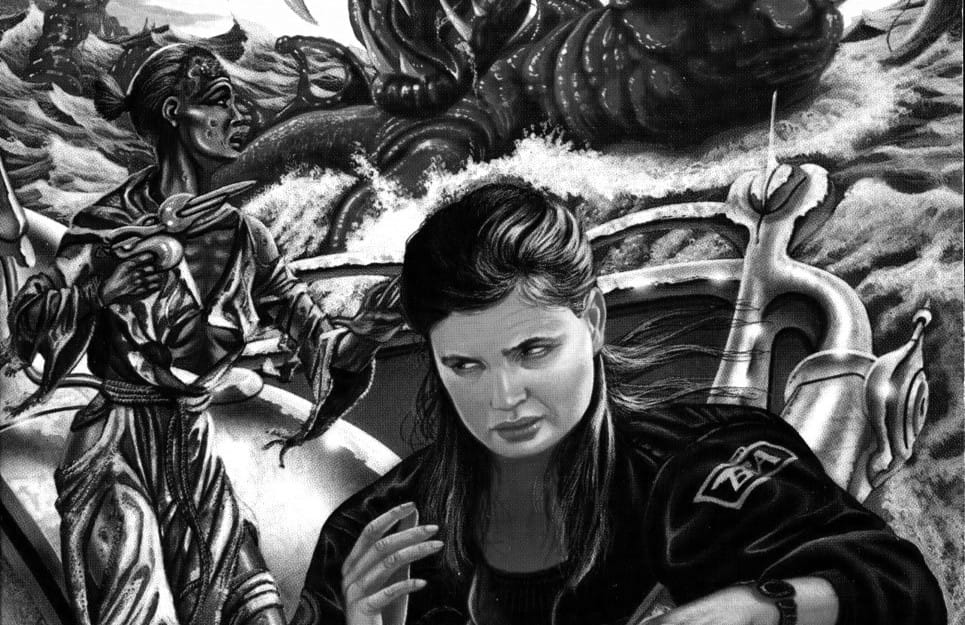
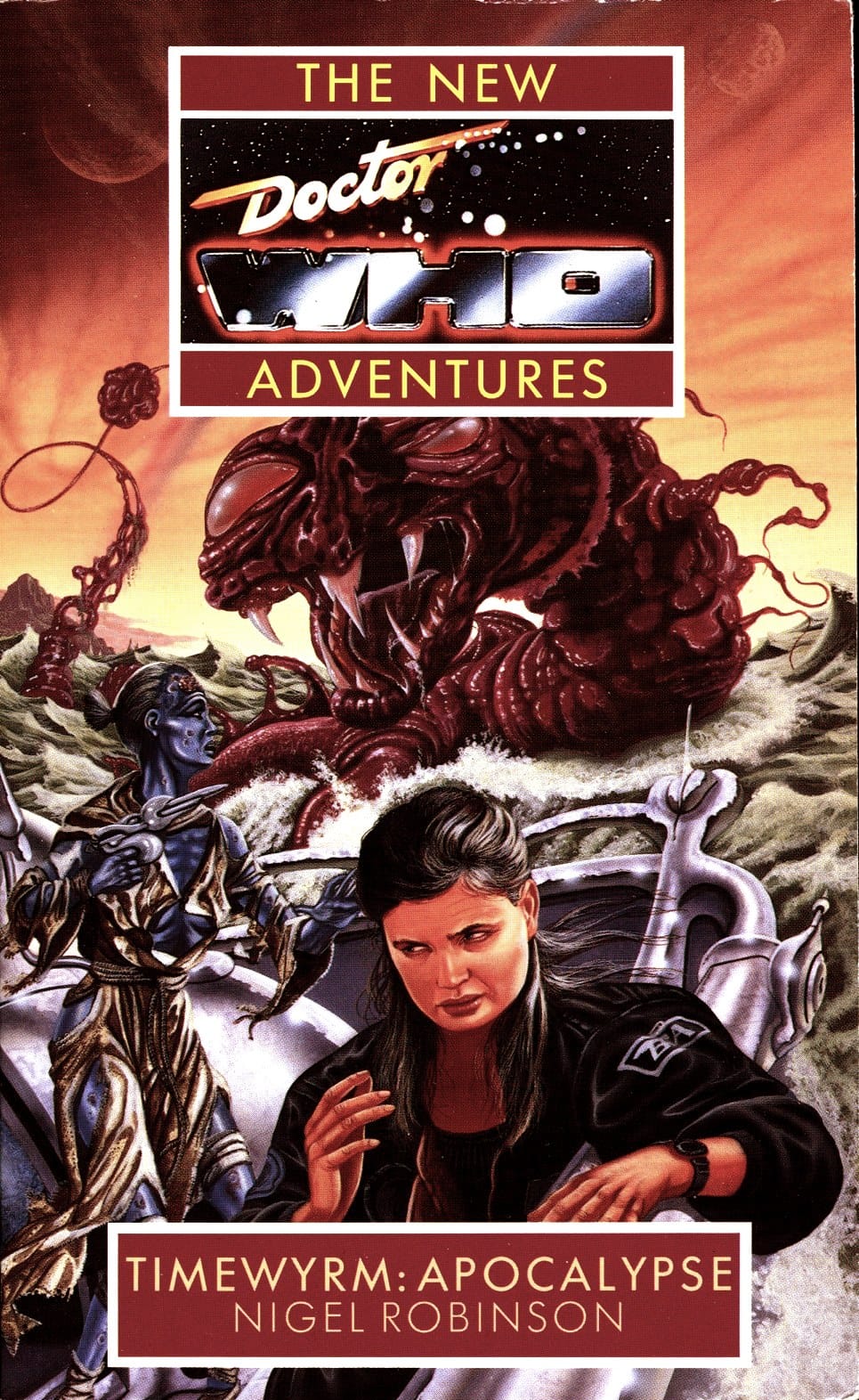
Timewyrm: Apocalypse
Virgin New Adventures #3

"Too scared to come out and fight, eh? You dictators are all the same, letting the little people do the dirty work while you sit in your ivory towers enjoying the fruits of their toil. Your manipulation of other species disgusts me almost as much as your perversion of nature. Call yourself superior? You wouldn't last a day out here on your own."
— The Doctor
The third novel in the Virgin New Adventures series, as well as the third in Timewyrm arc was written by another established Doctor Who author - Nigel Robinson. Robinson was the editor of the Target novelisation range between 1984 and 1987, and had written a number of First Doctor novelisations. Robinson previously tried to get an original fiction range off the ground, unsuccessfully, and was thrilled with the new Virgin range.
Robinson submitted a proposal titled 'The God-Machine', was contracted in September 1990, and submitted his manuscript in January 1991. Similar to Exodus, the premise of the Timewyrm had to begin and end the novel, but the extent of its role was entirely optional. Instead, a throwaway line from the Doctor about whether there were any cats aboard the TARDIS was added as a teaser for the next mini-arc that would follow Timewyrm - Cat's Cradle.

As there had been two books set in the past to open the series, Darvill-Evans wanted a far-future setting for the third, and Robinson built upon his interest in genetics, displaying a far-future where humanity had re-evolved due to the involvements of aliens.
The Doctor and Ace arrive on Kirith, a world at the very edge of the explored universe. There they find the locals, the Kirithons, which are a genetically engineered species who live under the benevolent guidance of the Panjistri. The Panjistri turn out to be using the Kirithons, channeling their psychic potential for their own evil gains, while also being influenced by the Timewyrm. A young Kirithon called Raphael is thrust into the limelight as the Doctor and Ace try to unravel who is truly in charge on Kirith. Raphael is ultimately revealed to be possessed by the Timewyrm, and the Doctor drives it off, helping the Kirithons declare independence in the meantime.
The VNAs did not often include other Doctors, but in this one the Second Doctor is prominent throughout. Although it was early in the range, the structural choice of the novel showed the willingness throughout to take risks, even if sometimes it did not pay off. Robinson later told Doctor Who Magazine that Apocalypse "wouldn't have happened" if it was not for the Second Doctor's presence throughout.
This one for me, unfortunately, fell rather flat. This book is rarely talked about in fan circles, with the other three in the Timewyrm arc being discussed because either it was the first, it sparked an ethical debate, or it was a fan favourite. The reviews at the time called it "good, standard Doctor Who" and the Doctor Who Magazine readers' poll placed it 52nd out of 61. The real crime of this novel is that it is rather dull, and drags a bit in the middle.
When comparing the previous stories, which were grounded in real places and times, the lack of grounding and launch into extreme hard sci-fi really is jarring. I found the novel extremely muddled and all over the place in a way which made it hard to stay engaged with. The Panjistri-Kirithon politics takes up most of the book, but does not really create enough investment or tension to sustain itself. It does not help that both the Doctor and Ace spend their time being confused themselves, leading to a lack of concentration for the reader.
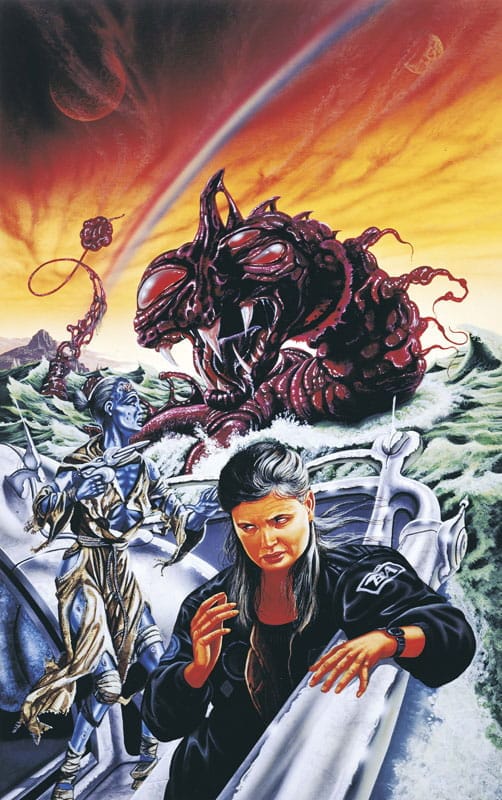
Regardless, it does have some interesting things going for it. It is the first book in the series that really takes advantage of its format - this sort of story could not have been told on TV. The designs of the aliens are strange, and leaning far more into hard sci-fi rather than the strangely dressed humanoid.
There are also two themes throughout this book that are revisited throughout the subsequent books, with the first being the Doctor becoming more fallible throughout, with his attempt at manipulating the situation failing and causing a revolution to fail. The second was focused on Ace, and what would become her arc throughout the first ten books. The Doctor deliberately sabotages a romance for Ace, leading to the slow erosion of trust between Ace and the Doctor.
The evolution of Ace and the Doctor's relationship throughout the TV show, and through the novels culminating in her exit in Set Piece, really entered a new era in this novel, and despite the many other things that this book fails to do, it manages those complex emotions very well.