Timewyrm: Genesys

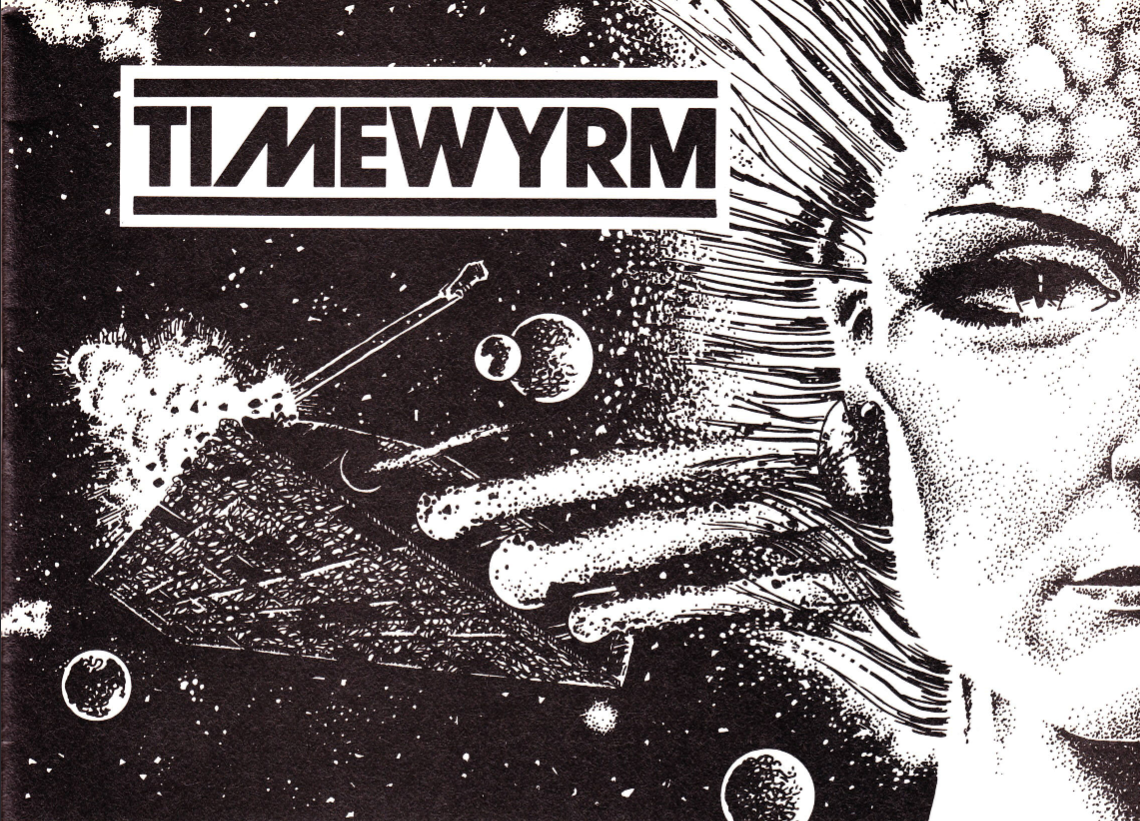
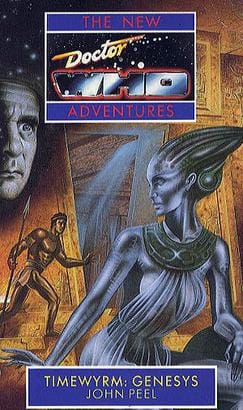
Timewyrm: Genesys
Virgin New Adventure #1

“It’s mostly a whiff I get. Evil, pure evil. When you’ve been after it as long as I have, it starts to feel like a bad stench in the air. And this city is filled with it.”
— The Doctor, Timewyrm: Genesys
The first, full-length Doctor Who novel (not counting Doctor Who and the Invasion in Space) was published on the 20th of June 1991, two years after the series was placed on an indefinite hiatus. Although many writers and editors of the Target Novelisation range pushed for an original fiction series, the BBC repeatedly turned down the idea. Nigel Robinson, editor for the Target Novelisations in the 80s, had tried to get a similar range of the ground during his tenure without joy. His successor, Peter Darvill-Evans, succeeded in 1989 by convincing outgoing producer John Nathan-Turner to allow it to go ahead. The idea was to aim the books squarely towards adults, promising to go darker than ever before.
From early in the ranges conception, the idea that the first few books would be part of a small overarching plot, aimed towards retention of readers. Darvill-Evans had proposed that this take the form of six books in which the Master scattered copies of Ace across the universe, modelled on the Key to Time plot. Nathan-Turner was not too enthusiastic about this, calling it too restrictive, and suggested that the series be held together with a vaguer linking device.
This resulted in the Timewyrm series - loose interconnected books with a single antagonist. Timewyrm: Genesys was the first, and had an initial printing of 20,000 copies, which sold out. Virgin then printed another 5,000. It was written by John Peel, an author who was prevalent in the Target Novelisations range. The initial pitch featured the timewyrm being a computer virus inside of a planetary neural network. Darvill-Evans wanted "something with Mesopotamians" instead, and Peel happily obliged, reworking the story as set in ancient Sumer inspired by the Epic of Gilgamesh.
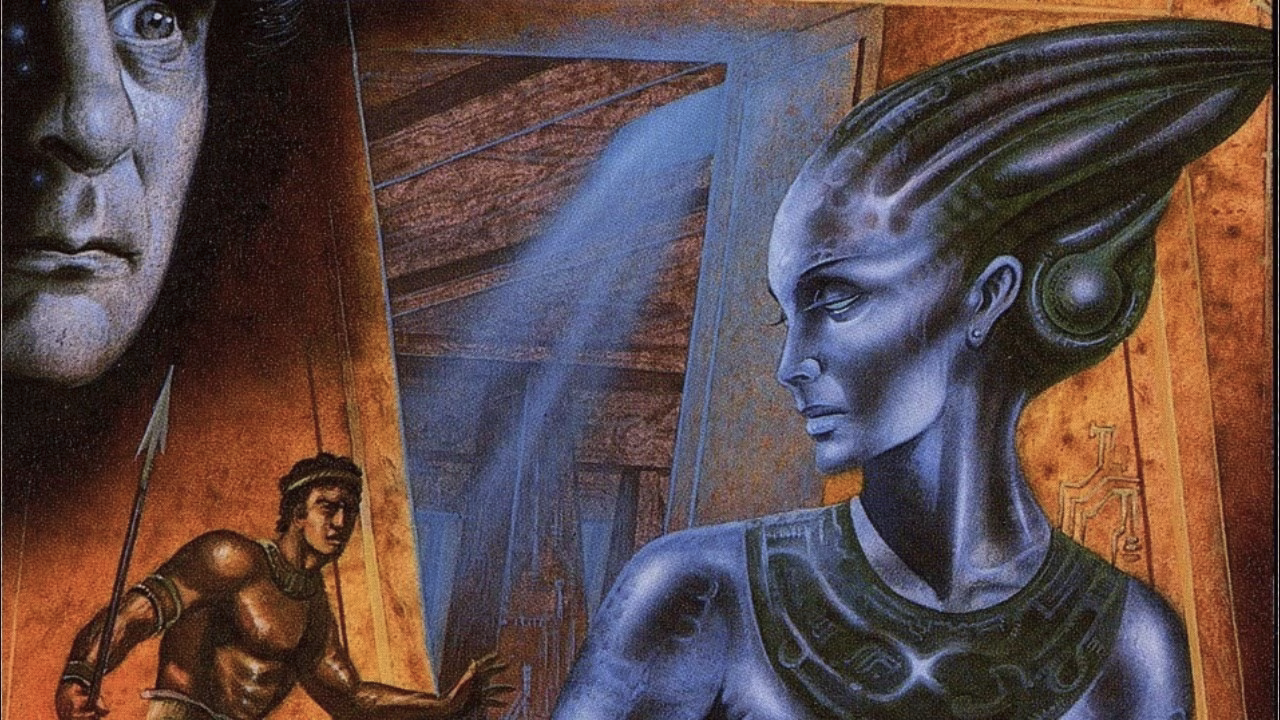
Initially, the timewyrm was going to be a mechanical spider, but this was quickly switched to a snake. The imagery of the snake gave the book it's subtitle Genesys. The tone and aesthetics for the series were established by Andrew Skilleter, who painted all four Timewyrm covers for a consistent "series look".
John Peel was an author who was prevalent in the Target Novelisations range. Born in Nottingham in 1954, he moved to New York State in 1981 and had written eight novelisations before being the first author to pen an original novel. Peel disliked the seventh doctor on television, particularly the machiavellian aspect of the character, deciding that his version would be much more fallible. Peel decided that in order to appeal to new fans that might pick up the books, he would give Ace amnesia at the beginning of the book, allowing the reader to discover (and rediscover) the series' basic premise alongside her. Sophie Aldred, whose character Ace featured alongside the Seventh Doctor in this range, wrote the introduction.
The Doctor and Ace arrive in ancient Mesopotamia, where King Gilgamesh is under the influence of the goddess Ishtar, who is in fact an alien called the Timewyrm in disguise. The Timewyrm is feeding on the large amounts of psychic energy of the local civilisation and working towards a mysterious larger plan. Ace integrates herself into Gilgamesh's court, where she finds that the King tries to sexually assault every lady in sight), while the Doctor tries to separate Ishtar from the body she has inhabited. The Timewyrm slips from the Doctor's grasp, and she is set loose through the time vortex, setting up the cat and mouse game between them over the next three books.
Although it is a significant book for many reasons, some of which kicking off the world of original Doctor Who fiction and sustaining the show through its "wilderness period", there are quite a few problems. This particular book's claim to being "darker and more adult" is almost just entirely the fact that sexual assault and rape by Gilgamesh is written throughout, as well as an fascinating with describing women by their breasts and weird sexually charged language towards a thirteen year old girl. The range starts at their worst for this - they quickly move on from this "sensationalist" adult-ness - conflating a darker more sombre tone with just adding sex.

Worse especially is the slight out of character response that the Doctor gives to this. When Ace suggests that she will fight Gilgamesh if he attempts to assault her, the Doctor tells her to "stop thinking in twentieth-century terms". Peel himself framed the sex as "very subdued" and intended to show Gilgamesh's character, but the effect is a lot more present and the threat towards Ace is present all throughout the book. The Doctor's disregard of Ace's safety feels very out of character and made it hard to get through.
This is probably the biggest misstep of the opening four books, and caught the eye of the press at the time. On the 11th of August 1991, the newspaper News of the World (of phone-hacking infamy) ran a half-page story "Sexterminate!", seemingly objecting to the content of the book. The paper cited "outraged fans" who had contacted the fanzine Dream Watch Bulletin - one of the letters they drew on was from David McIntee, who would later write for the range, though McIntee's letter had actually criticised specific aspects of the book rather than condemning it as a whole. Virgin complained to the Press Complaints Commission, however the complaint was not upheld. A BBC spokesperson told Doctor Who Magazine that the book was about as pornographic as "a certain children's railway series".
The book is always trying to strike the balance between welcoming new readers, and satisfying the fanbase at the same time. It takes the time to explain some series basics but is also stuffed full of references that might go over the head of most. This sort of swells the book, to the point where I think cutting out many of these and slowly folding them in might have been a better approach.
However, not all is doom and gloom. Peel definitely enjoyed writing the book which shines through to the reader, and the Mesopotamian setting is incredibly interesting, balancing the line between sci-fi and historical that Doctor Who is known for doing well. The book is not boring to read, but it is cluttered and confused at times. In the Doctor Who Magazine Issue 265 Readers' poll, the book came 48th of 61.
Paul Cornell, author of the final Timewyrm book Revelation, offered a better definition of what the range should be in an interview with Doctor Who Magazine.
"I consider 'adult' to mean 'mature' - talking to adults. Not adolescent readers who want sex and violence and believe that's what being adult is all about, but actually what being adult is about: society, attitudes, getting on with people.""I consider 'adult' to mean 'mature' - talking to adults. Not adolescent readers who want sex and violence and believe that's what being adult is all about, but actually what being adult is about: society, attitudes, getting on with people."
— Paul Cornell
This eventually is what the range would settle into, but the first few books have a rocky beginning. The popularity of this book was essential, however, in getting the range off the ground, and continuing it through the nineties.