Timewyrm: Exodus

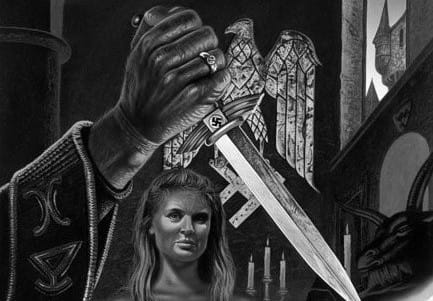
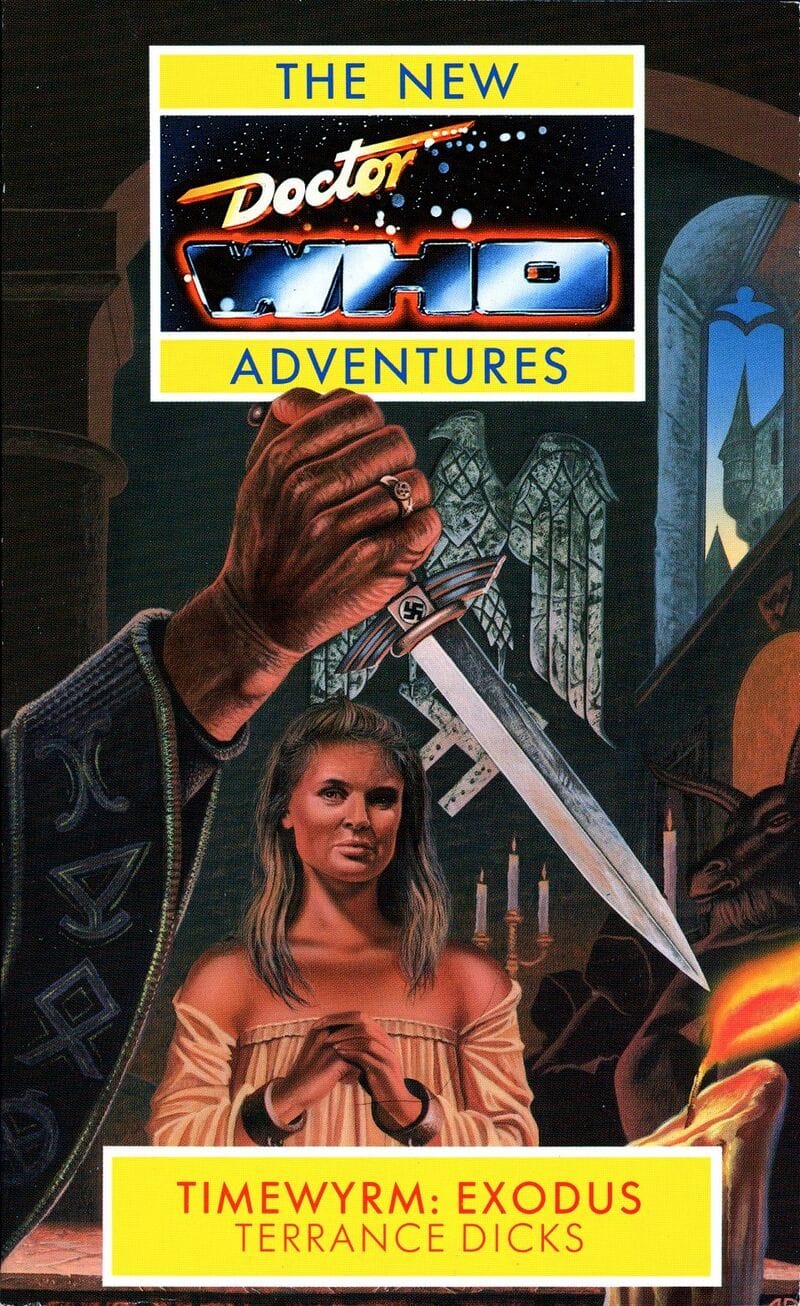
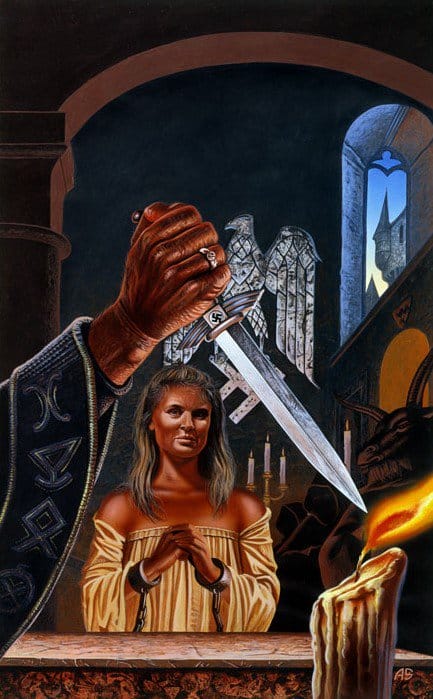
Timewyrm: Exodus
Virgin New Adventures #2

"Fear - fear and evil. Can’t you feel it, Ace? It’s in the air… like poison…"
— Timewyrm: Exodus
The second New Adventure novel couldn't have been more different from the first. Genesys reached for "adult" and landed on sex for shock value, whereas Exodus did the same and landed right in the middle of Nazi high command during the second world war. The alternate history combined with a science fiction lensed look at how the Nazis rose to power during the 1930s provided a solid ground for Terrance Dicks to explore the relationship between Ace and the Doctor, as well as the Doctor's reaction to set points in time.
Terrance Dicks is best known for his vast contribution to the Target Novelisations range, where he spent seventeen years adapting television serials for the books. Before his focus on literature, he worked on the television show during the Pertwee era as script editor. Dicks was the biggest name in Doctor Who books at the time, so getting him on board the growing Virgin Books project "meant a lot", especially that Dicks was enthusiastic.
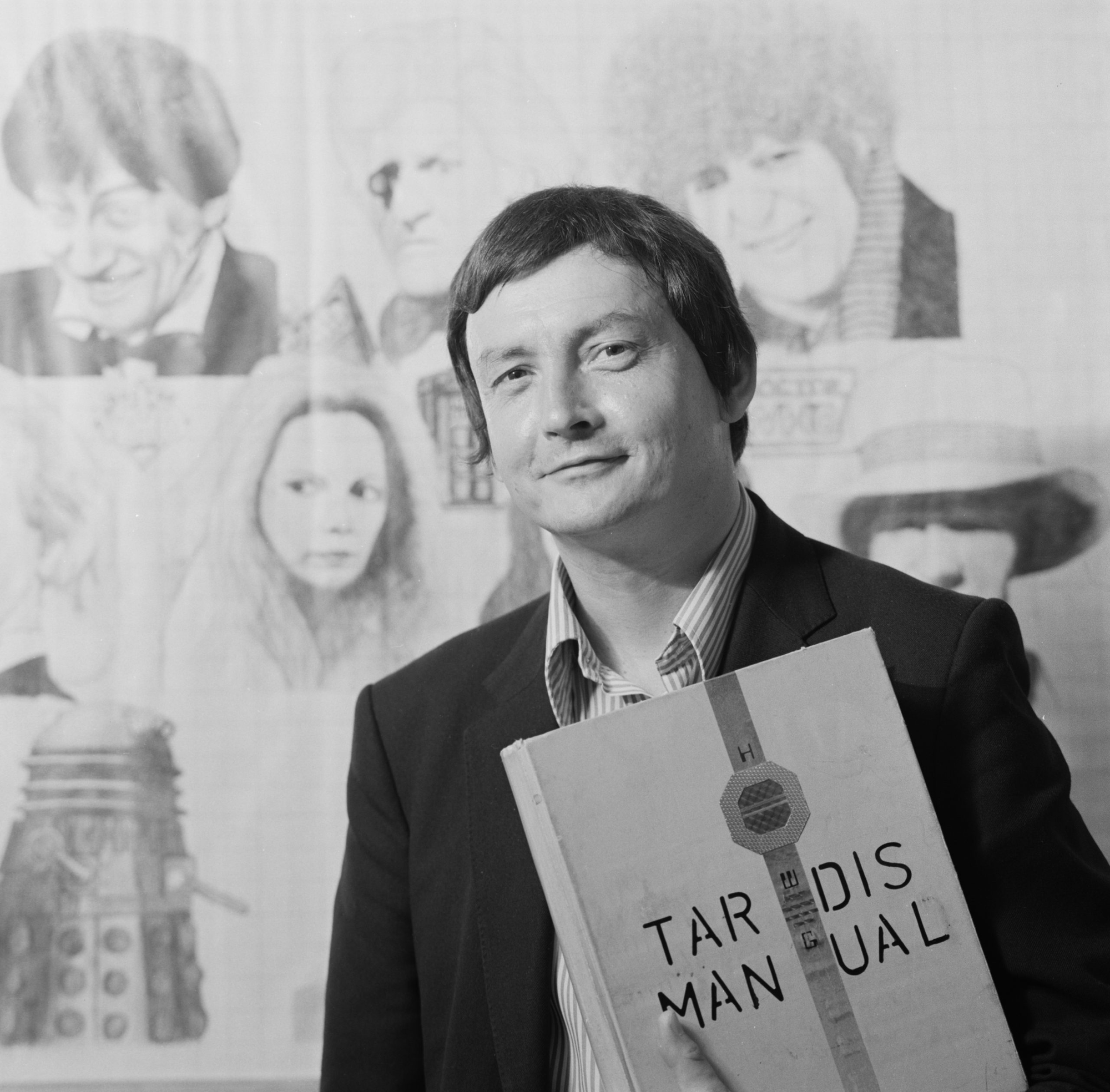
Like other authors writing for the Timewyrm arc, Dicks was given the concept and told to fold it in throughout, allowing it to escape at the end, but told he could do anything in between. Dicks chose the focus of the Nazis:
"I've always been very interested in the Nazis. I'm totally opposed to them in every way, but it is both a fascinating and horrifying period to study."
— Terrance Dicks, Doctor Who Magazine Issue 178
His initial draft, named the Exodus of Evil, reached Peter Darvill-Evans, editor of the range, at the start of February 1991. Darvill-Evans found it too "straightforward" as Dicks had followed a similar style to the Target Novelisations, where there was a single viewpoint, whereas Darvill-Evans wanted it more complex in its structure, and told from multiple different perspectives. Dicks then rewrote it, with the final book coming in at 270 pages, the longest piece of work he had written up to that point.
During the writing process, Dicks had almost no contact with the other three Timewyrm writers, with the exception of one letter from the author of the fourth novel, Paul Cornell. Cornell asked to carry a character over from Exodus to Revelation, and together they agreed that Lieutenant Hemmings would vanish from Exodus in a duplicate TARDIS. Cornell had finished his novel before Dicks started Exodus, resulting in a clash between the characters of Hemmings in the books, including different first names.
The story begins in 1951, where Ace and the Doctor decide to visit the Festival of Britain. However, the timeline has become muddled and the England they see is not one that they recognise. They follow the disruption of time back to 1923 Munich, then onwards to 1939. The Doctor ends up infiltrating Nazi high command to befriend Hitler and Goering. Ace breaks away to end up in an alternate future where the Nazis have occupied Britain. While trying to figure out what has gone wrong, the TARDIS team come up against the War Chief (originating from the serial The War Games) who is pulling the strings of specific Nazi commanders, the Timewyrm, who is embedded in Hitler's head. The Doctor expels the Timewyrm and stops the War Chief, allowing the alternate timeline to unravel and things to return to normal.
This novel, though not without major flaws, was a considerable upgrade from Genesys. The writing is noticeably better, and Dicks paces the story far more evenly. The more complex nature of this piece, folding in jumps in time, locations and alternate histories allow it to grab the focus of the reader well. It is darker than Genesys too, but in a way that is more complicated than just sex and shock value.
Gary Russell, who reviewed the book for Doctor Who Magazine issue 178, called it a "stunning, thrilling novel of political wrangling". TV Zone's Richard Houldsworth rated it "one of Doctor Who's finest adventures". Darvill-Evans later put the novel on the official author guidelines reading list with the notation of "Dicks knows more about Doctor Who storytelling than anyone". In the Doctor Who Magazine Issue 265 readers' poll, it placed 6th of 61, the highest of the opening quartet by far.
However, the book is not without its faults, and that is shown in what the book does with the Nazis on a deeper level. Although the "shock" of sex in Genesys is not in this novel, it does something similar with the Nazis. The "shock" in this case is explaining the reasoning behind the Nazis success with the manipulation of outside forces in the forms of the Timewyrm and the War Chief. It suggests that when you strip away the alien intervention that Hitler is an incompetent madman who would not have succeeded on his own. It is important to note, especially when portraying the rise of the Nazis and their atrocities in science fiction, that the monsters which caused millions of deaths through the war and the Holocaust, were simply human, and that humans can do such horrors. Ordinary people chose to support it and help carry it out. The implication that space aliens were actually behind it feels disingenuous.
There are scenes throughout the book where the Doctor befriends and saves Hitler in order to manipulate him in the opposite way of the Timewyrm, and they are particularly strange in the context. The book never quite earns the weight of the subject matter, and Ace is dismissed quickly when she tries to discuss the ethical implication of what they are doing.
Dicks described the plot as deliberately layered. He told Doctor Who Magazine that the moral complexity of the Nazi commanders troubled him. He found Goering "about as near to a good Nazi as you could get," and Himmler "totally distasteful," and concentrated on the power struggle between the two because "it was quite extraordinary." He is so fascinated by the mechanics of power, the Goering-Himmler rivalry, the Doctor outmanoeuvring everyone in the room, that the real human horror of the setting gets absorbed into the adventure. The darkness is used as set dressing rather than being confronted.
Lance Parkin, who would write for the range a number of years later, rated the novel highly, but took issue with this exact problem. His opinion was that the Nazis were incredibly evil, but they were human and that was the most frightening thing. He eventually wrote his own New Adventure, Just War, as a response to Exodus, with a focus on how the Nazis' treatment of islanders during the occupation of the Channel Islands in the 1940s.
Perhaps well-written books are always meant to draw discussion, and the conversation around true historical horror and how it is presented in science fiction that sprung from Exodus truly made it stand apart from the first four Timewyrm books.