Timewyrm: Revelation


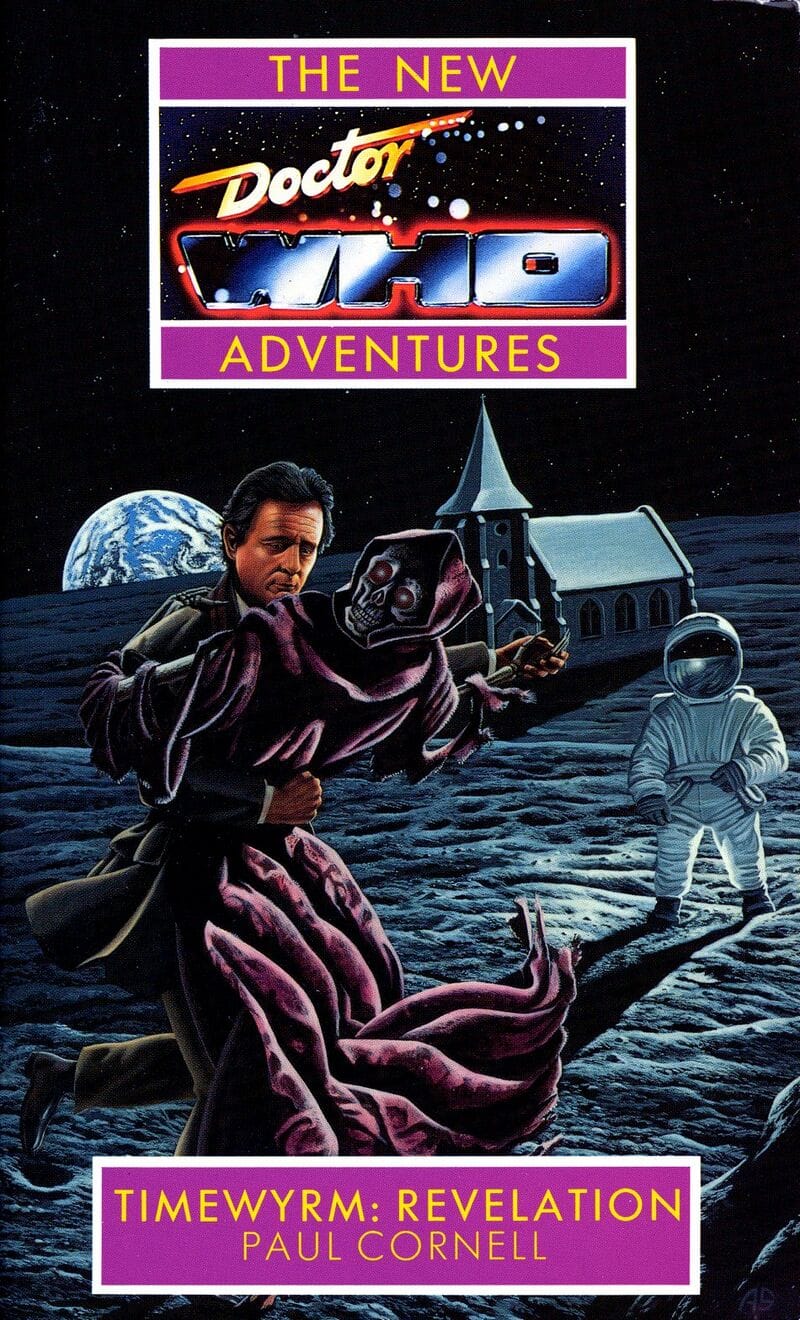
Timewyrm: Revelation
Virgin New Adventures #4

"Putting props in place, making sure people know their lines, sometimes leaving notes on the script. All the universe is a stage, Ace. Acting's not enough for me. I like to direct."
— The Doctor
While the first three novels of the Virgin New Adventures range were written by established authors through the Target Novelisations, the fourth, Timewyrm: Revelation, was written by the first newcomer - Paul Cornell. Cornell was a fan before he was a writer, with his first short story being published in Doctor Who Magazine issue 163. His first NA was reworked from a previous Fifth Doctor story that he wrote for a fanzine called Queen Bat.
In July 1990, he submitted an 18,000 word sample, featuring the Doctor navigating a garden maze in his mind. Although Darvill-Evans faced opposition for not using a well-established name for the final Timewyrm novel, he held his ground, later stating he "wanted to demonstrate that we weren't afraid of taking on new authors." Cornell was formally commissioned on the 21st of September 1990. The commission coincided with his first BBC radio work, and he later said that it "saved me, changed my life, gave me a career, gave me a peer group. Peter has my eternal loyalty for that." Cornell would then go on to be one of only two people to be Hugo-nominated in prose, comics and television.

Timewyrm: Revelation's structure was built around the work of Robert Campbell, who wrote about archetypal stories and legends, with a focus on the stories where "the guy enters the Dark Pit and finds out something about himself".
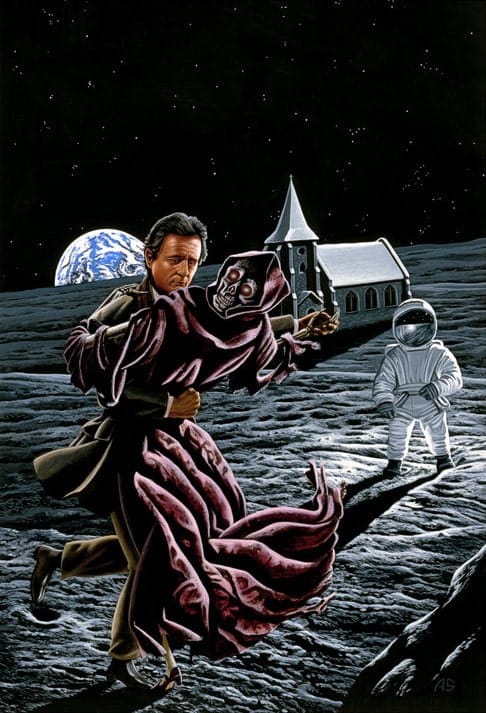
The Doctor and Ace arrive in the sleepy Norfolk village of Cheldon Bonniface, only to find that the villagers are all imposters. As Ace reaches the edge of the village, she falls off onto the surface of the moon, dying in the process. Separately the Doctor confronts the Timewyrm and Death itself, and ends up being killed himself. Both of their corpses lie together in St Christopher's Church, where the church's sentient intelligence, Saul, looks after them. Their minds, however, continue to wander through a surreal world that ends up being the Doctor's own head. It is split into seven different regions, one representing each of his incarnations.
The Third Doctor has been tortured by his own guilt and the Fifth Doctor had been imprisoned in a pit. Ace frees the Fifth Doctor, who acts as the Doctor's conscience, and restores the Doctor back to life. After the Doctor is resurrected, the Timewyrm is defeated, and her essence is placed into a baby left with friends of the Doctor called Peter and Emily Hutchings. The Doctor and Ace, now also restored, leave the saved village.
This is by far the best written of the four Timewyrm books, and is the one that truly creates the atmosphere perfectly. The ambition is clear on the page in a way that was missing in the first three books. Cornell uses the chance to explore the inside of the Doctor's head to comment on the show's own past, specifically critiquing the Pertwee era and the discussion surrounding Buddhist philosophy. He introduces a number of ideas that would later be resurrected by other authors - including Death personified.
Death was a particular highlight, with the Doctor's encounters with them, and the way that the ending ties everything back to Cheldon Bonniface really giving the book an emotional through-line. However, like Apocalypse, I did find certain sections very muddled, and it had a certain over-reliance on previous Doctors. The surreal structure of the Doctor's internal mind means that the plot could be difficult to follow even though the writing and world-building is strong.
The 'Ace (as a child)' death scenes really didn't land with me, and that plot line sort of clashed with the rest of the novel, and Ace and the Doctor clash here in ways which I don't particularly believe character wise. The range would later develop a real tension between them, where the reader understands why they are fighting, but it feels like this book had one foot in and one foot out of that.
Interestingly, Revelation was not critically well received when first published. TV Zone called it a bizarre cross of Warriors' Gate, Clive Barker and Stephen King, and Peter Linford in DWB doubted that teenagers could follow it. However, in the Doctor Who Magazine readers' poll it placed 31st of 61. As the years have passed, the love for this novel has increased significantly. Russell T Davies later called it a major influence from which he has "freely stolen". The book is even better looking back at it - the following books build upon the ideas and the darkness was brought into the new television revival. Revelation was probably ahead of its time when it was published, and it took a few years before the critics really caught up.
Cornell set the tone for the Virgin New Adventures - what "adult" meant, and what the range would eventually morph into. In the Doctor Who Magazine interview he gave later that year, he said, "I consider 'adult' to mean 'mature' - talking to adults. Not adolescent readers who want sex and violence and believe that's what being adult is all about, but actually what being adult is about: society, attitudes, getting on with people. Ace is a great character to explore those attitudes with. As she's growing up in the books - and we're talking early twenties now - this is the age of the audience. We're talking about growing up with the audience - rather as Star Trek did - and that's an interesting thing to do."